If you create content today, you’re competing on speed, quality, and consistency. Doing all three without AI is no longer realistic.
The global AI content market surpassed $77.95 billion in 2025.
This growth reflects how quickly creators and marketing teams are adopting the best AI writing assistant tool to maintain publishing speed and scale content production.
In the coming years, content creation will work differently. The answer is
Speed matters. Quality matters. And staying visible in search is harder than ever.
Recent studies highlight how quickly AI adoption is growing:
- 85% of marketers use AI writing assistant tools daily.
So competition is higher, publishing speed matters more, and search engines expect well-structured, helpful, and consistent content.
As a result, an AI writing assistant tool is now necessary rather than optional.
This guide will break down the top ten search tools, comparing their features, pricing, and specific use cases. You’ll be able to identify the ideal tool for your content objectives by the end.
What Is AI Writing Assistant Software & How Does It Work?
An AI Writing assistant tool is an AI-powered tool that helps you write, edit, improve, and refine content with ease. Whether you’re a blogger, creator, marketer, or part of a team, these tools support you at every stage from the first idea to the final draft.
Think of it as a smart writing partner that works with you, not just a tool you switch on.
How AI Writing Assistant Software Works
AI writing assistant tools work:
AI writing assistants use a mix of smart technologies to do the heavy lifting:
➕Natural Language Processing (NLP) to understand text
➕Large Language Models (LLMs) to generate human-like content
➕Automation to speed up writing, rewriting, and editing
You prompt it, and the assistant quickly transforms it into comprehensible, useful content.
AI Writing Assistant Tools vs Grammar Checkers
➕ Grammar checkers focus on spelling, grammar, and basic clarity
➕ AI writing assistants help with ideas, outlines, full drafts, tone, SEO, and rewrites
In summary, AI writing assistant tools enable you to produce content more quickly and intelligently, while grammar tools correct errors.
What to Look for in a Modern AI Writing Assistant Tool
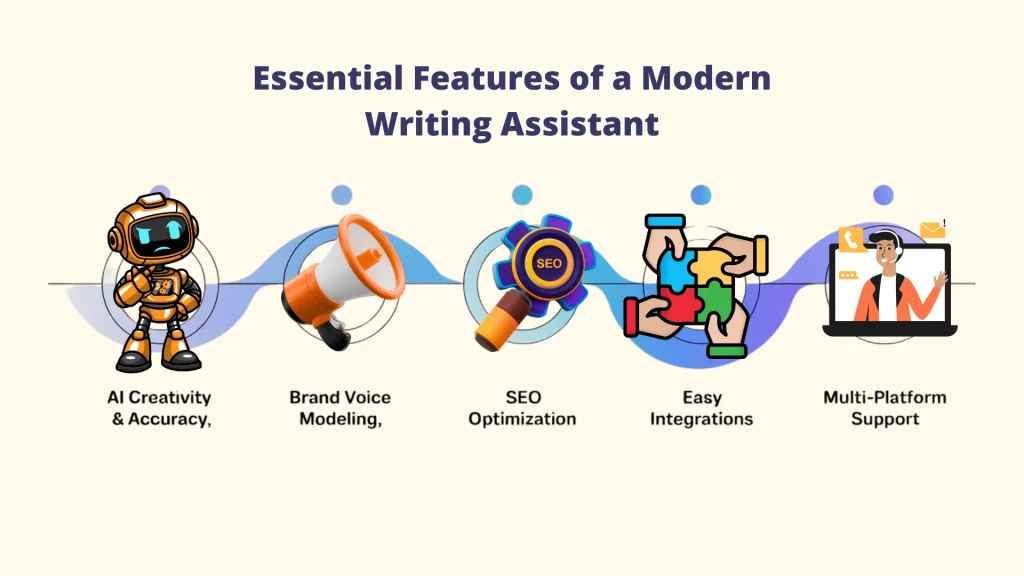
Not every writing assistant software delivers the same results. The best tools stand out by offering features that truly improve how you write.
1. AI Creativity & Accuracy
A strong AI writing assistant tool should help you sound original and stay accurate. The best tools are able to:
📍 Generate fresh, non-repeating content
📍 Keep the tone human, not robotic
📍 Understand context and offer useful suggestions
📍 Support accuracy with fact-checking when required
Using Writix’s help, a rapid-eliminating AI tool with multiple AI models can deliver unique and diverse content.
2. Brand Voice Modeling
Your writing should sound natural and personal, not machine-made. A strong AI writing assistant tool helps you:
📍 Learn your unique writing style over time
📍 Maintain consistent tone across all content
📍 Adapt to different brand voices for multiple clients
📍 Preserve your personality while enhancing quality
3. SEO & Content Optimization Features
Getting found online is just as important as writing well. The best writing assistants help you improve visibility by offering:
📍 Keyword research and integration
📍 Content scoring based on SEO best practices
📍 Readability analysis
📍 Meta description and title tag generation
📍 Competitor content analysis
Together, these features help your content rank better and read better.
4. Ease of Use & Integrations
The usefulness of writing assistant software depends on how well it integrates into your daily routine. The best AI-powered tools are designed to be simple, fast, and flexible.
📍 Intuitive, user-friendly interfaces
📍 Browser extensions for writing anywhere
📍 CMS integrations (WordPress, Medium, etc.)
📍 Team collaboration features
📍 Export options to multiple formats
5. Multi-Platform Integration
Modern creators work across multiple platforms. Look for tools that integrate with:
📍 Content Management Systems (WordPress, Webflow, Wix)
📍 Social media platforms (LinkedIn, Twitter, Facebook)
📍 Document editors (Google Docs, Microsoft Word)
📍 Project management tools (Notion, Trello, Asana)
📍 Email marketing platforms
7 Best AI Writing Assistant Tools (AI-Powered)
Tool 1: Writix

Writix flips the usual AI writing assistant experience on its head. Instead of asking users to “prompt better,” it replaces prompts entirely with pre-built, task-specific workflows.
You choose what you want to create, supply a few inputs, and the system handles the structure, logic, and output automatically.
Best For
Entrepreneurs, marketers, and agencies who need fast, consistent results without prompt engineering, especially those managing multiple content formats across platforms.
Pros
➕ One-time payment eliminates subscription fatigue
➕ Extremely fast content generation (seconds, not minutes)
➕ Easy to learn, no need for prompt writing or AI
➕ Multiple AI models for diverse writing styles
➕ Users report up to 80% time savings.
Cons
⛔ Workflow customization is limited to predefined structures
Pricing: It costs $17 a month and includes credits and AI models.
Why Choose Writix?
If you want instant, structured results without the complexity of prompts, Writix is one of the most efficient AI writing assistants available. Its workflow-driven design and one-time pricing make it a high-value, long-term solution for creators focused on speed, automation, and consistency.
Tool 2: ChatGPT
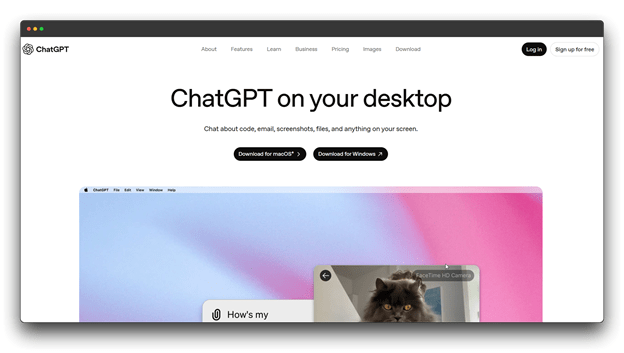
Rather than specializing in a single writing task, ChatGPT excels through breadth. It combines advanced language modeling with reasoning, research, and creative generation, offering creators a single interface for ideation, drafting, and iteration.
Best For
Beginners, budget-conscious creators, and professionals who need a single, versatile AI assistant for writing, brainstorming, research, and general productivity, not just content generation.
Pros
➕ Extremely versatile across content and non-content tasks
➕ Strong free tier for experimentation and casual use
➕ Frequent feature updates and improvements
➕ Excellent for ideation, outlining, and brainstorming
Cons
⛔ Long-form content can become repetitive without guidance
⛔ Output quality depends heavily on prompt quality
⛔ No native SEO optimization features
Pricing: $21 a month for the most accurate and intelligent model.
Why Choose ChatGPT?
ChatGPT is ideal if you want one AI tool that can handle almost anything reasonably well. While it may lack specialized SEO or workflow automation, its flexibility, reasoning ability, and constant evolution make it a strong foundational tool.
Tool 3: Writesonic
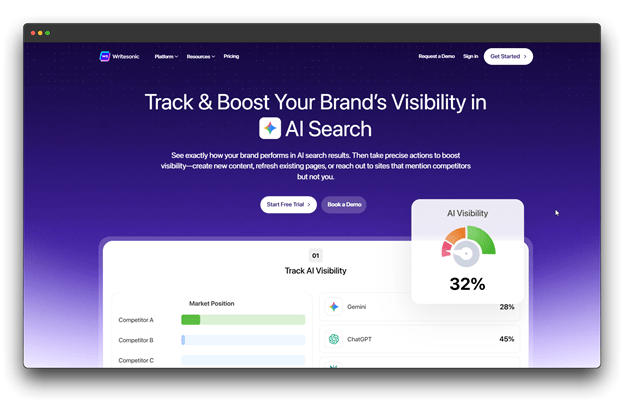
Writesonic is an AI writing platform built with search performance in mind. Designed for marketers and SEO professionals, it combines long-form content generation with built-in optimization tools, allowing users to create, optimize, and publish ranking-focused content from a single dashboard.
Best For
Search visibility is a top priority for SEO bloggers, content marketers, and agencies that must generate optimized content in large quantities.
Pros
➕ Native SEO features reduce reliance on third-party tools
➕ Real-time Google data improves topical relevance
➕ Unlimited word plans offer strong value
➕ Bulk generation significantly accelerates content output
Cons
⛔ Interface is less refined than some premium competitors
⛔ Output quality can vary by template
⛔ Advanced features require onboarding time
⛔ Customer support response times can be inconsistent.
Pricing: At $39 per month, including features like prompt explorer and sentiment analysis.
Why Choose Writesonic?
If creating SEO-optimized content on a large scale is your goal, go with Writesonic. It is ideal for processes involving search-driven content because of its integrated optimization tools, bulk-generating capabilities, and unlimited plans.
Tool 4: ContentForge Pro
Designed for marketing teams and agencies, ContentForge Pro is an AI authoring tool. It is ideal for managing numerous customers and campaigns from a single workspace since it emphasizes project structure and collaboration while supporting both short-form and long-form material.
Best For
Marketing agencies, professional copywriters, and e-commerce businesses producing diverse content formats across multiple clients or brands.
Pros
➕ Balanced support for short-form and long-form marketing content
➕ Strong organizational tools for agency workflows
➕ Built-in cost and productivity tracking
➕ Fast document navigation and editing
Cons
⛔ AI output typically requires manual refinement
⛔ Long-form editor limits generation in smaller increments
⛔ Customer support response times vary
Pricing: $47 per month with essential Digital Products and digital products
Why Choose ContentForge Pro?
When content volume, variety, and client organization are more important than simple AI generation, ContentForge Pro is a good choice.
5. Anyword
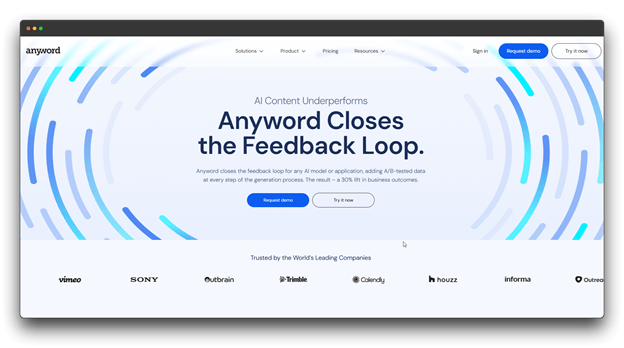
The AI writing assistant tool Anyword prioritizes performance and was created with conversion-focused marketing in mind.
Its standout feature is predictive copy scoring, which estimates how well content will perform before it goes live, helping marketers make data-backed decisions rather than relying on guesswork.
Best For
Performance marketers, advertising teams, agencies, and businesses that prioritize conversion optimization, A/B testing, and data-driven content decisions.
Pros
➕ Data-driven approach improves conversion rates
➕ Unlimited word generation on higher tiers
➕ Strong persona and audience targeting tools
➕ Well-suited for A/B testing and campaign optimization
Cons
⛔ Higher cost than general-purpose AI writers
⛔ Advanced features require onboarding and experimentation
⛔ Performance predictions improve with historical data
Pricing: Unlimited brand voice and copy creation are available for $49 a month.
Why Choose Anyword?
For marketers who gauge success by conversions rather than word count, Anyword is ideal. Its predictive scoring and analytics offer a clear solution whether you run paid campaigns or need every piece of material to work.
6. Blogi

An AI-powered writing assistant program called Blogi was created to automate article creation, optimization, and publication.
Unlike writing assistant software for writers, it focuses on running blogs on partial or full autopilot, combining multi-AI article generation with built-in SEO optimization.
Best For
Affiliate marketers, niche site builders, SEO professionals, and agencies that want to scale blogs with minimal manual involvement and target long-tail or LSI keywords efficiently.
Pros
➕ Designed for full or semi-automated blogging
➕ Built-in SEO tools reduce manual work
➕ Multiple AI models for different content styles
➕ Auto-posting and scheduling features save hours
Cons
⛔ Less suited for handcrafted editorial content
⛔ Requires monitoring to maintain quality and originality
⛔ The interface can feel complex for beginners
Pricing: $17 per month with writing credits and a personal use license.
Why Choose Blogi?
Blogi is ideal for users who want to write, optimize, and publish content on a large scale without having to write each post by hand.
7. ProWritingAid
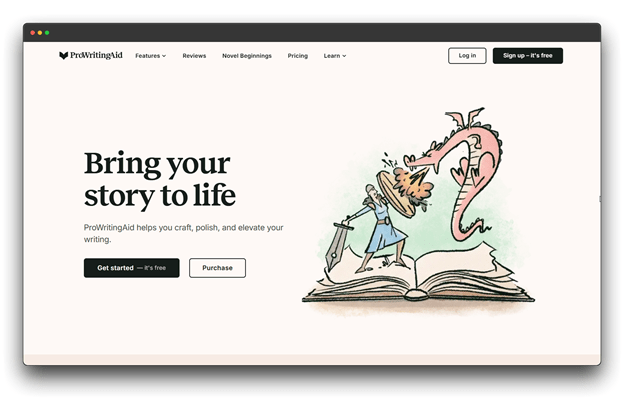
It is an AI writing assistant tool built for serious writers and long-form projects. Originally known for advanced editing, it has evolved into an AI-enhanced platform that supports writers from early drafts through detailed revision and final polish.
Best For
Authors, novelists, academics, and long-form content creators who value editing depth and writing quality as much as speed.
Pros
➕One of the most comprehensive editing tools available
➕ Excellent for book-length manuscripts and long-form content
➕ Integrates seamlessly with popular writing platforms
➕ Detailed reports help writers improve over time
➕ The lifetime license option offers long-term value
Cons
⛔ AI text generation is less advanced than dedicated AI writers
⛔ Feature depth may overwhelm casual users
⛔ Slower performance with very large documents
Pricing: $21.83 a month for in-person sessions with leading writers and editors
Why Choose ProWritingAid?
ProWritingAid is ideal when precision, consistency, and craft matter more than rapid generation. It’s a strong choice for authors, serious bloggers, and professionals who want to refine their writing and improve long-term skills.
How to Use AI Writing Assistant Tool Responsibly for Blogging
1. Transparency
You may not always be required to mention AI use, but being open about it can build trust, especially in expert, research-based, or editorial content. Being transparent demonstrates confidence, which is a good thing.
2. Fact-Checking
The most accurate but inaccurate information can be produced by the best writing assistant software models. Always make sure:
- Statistics
- Quotes
- Dates and factual claims
3. Human Enhancement
The proper AI writing assistant tool should support your writing rather than take over. Your content is distinctive and reliable because of your ideas, opinions, and experience.
If you’re targeting local audiences, tools like VidScribe AI can help optimize for local search results and also support features like AI redubbing, subtitles, and SRT file creation.
4. Quality Control
Always use a systematic editing procedure before publishing when utilizing writing assistant software.
- Multiple editing passes
- Fact verification
- Tone and brand voice alignment
- Originality checks
5. Ethical Guidelines
- Avoid misleading or deceptive content
- Do not impersonate real individuals
- Do not generate harmful or dangerous material
- Respect copyright and intellectual property rights
Best Practices for Using the Best AI Writing Assistant Tool
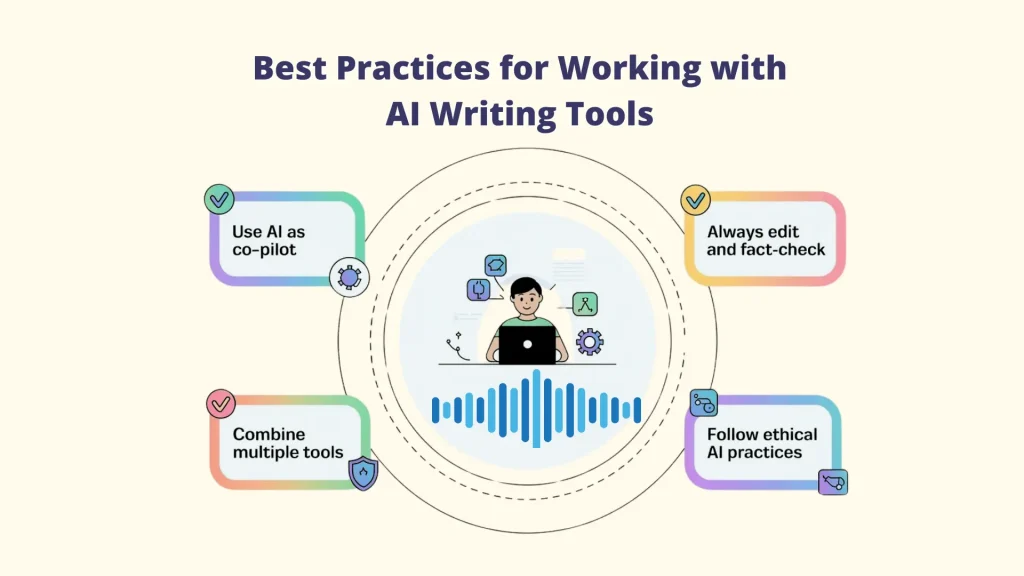
To achieve professional-quality results with AI writing assistants, treat them as productivity tools, not substitutes for human judgment.
A. AI as a Co-Pilot, Not a Replacement
AI works best when it supports your process rather than replaces it.
Use AI to:
- Generate initial drafts and outlines
- Accelerate research and ideation
- Handle repetitive or structural writing tasks
Your role is to:
- Provide direction and subject-matter expertise
- Refine tone, structure, and messaging
- Decide what meets your quality standards
While an AI Writing Assistant Tool, such as Writix, expedites the process, humans guarantee originality and meaning.
B. The Importance of Human Editing and Fact-Checking
Before publishing, make sure you have the following items on your editorial editing checklist:
✓ Verified all facts, data, and claims
✓ Reviewed structure, clarity, and logical flow
✓ Removed common AI phrasing and filler language
✓ Checked formatting, headings, and readability
✓ Run plagiarism and originality checks
C. Combining Multiple Tools for Best Results
Different AI writing assistant tools excel at different things. A multi-tool strategy improves outcomes. Here’s how you can use a smart multi-tool approach:
For Agencies:
Writix (bulk content) + ContentForge (client organization) + Copyscape (plagiarism)
For Authors:
ChatGPT (brainstorming) + Claude (writing) + ProWritingAid (manuscript editing)
For Bloggers:
ChatGPT (ideation) + Blogi (SEO drafts) + Grammarly (editing)
D. Ethical Considerations & Transparency
In some situations, being open about AI involvement is strongly recommended and sometimes required. You should consider disclosure when:
- Writing academic content (often mandatory)
- Publishing journalistic work (industry best practice)
- Creating legal or compliance documents (may be required)
- A client or reader specifically asks
Conclusion
AI writing assistants have evolved from experimental novelties to essential productivity tools. Whether you’re a solo blogger, content marketer, or creative writer, there’s an AI tool perfectly suited to your needs and budget.
Working with a small budget? Tools like Writix offer simple workflows with a one-time payment option. But here’s the important question: how will you use the tool?
AI Writing Assistant Tool can research topics, create first drafts, and help optimize for SEO. It does the heavy work for you. But your ideas, your stories, and your unique voice are what truly connect with readers.
So where should you begin?
Start with one or two tools that match your main needs. Test them with real projects. Adjust your workflow. Improve step by step. See what saves you time and what improves quality.
And always remember, people read content for insight, emotion, and authenticity. That part still comes from you.
– The future is not human vs. AI. It’s human + AI.
FAQS about Best AI Writing Assistant Software
Q: Can AI writing assistant tools completely replace human writers?
A: No, an AI writing assistance tool cannot and should not completely replace human writers. The most effective approach is using AI as a collaborative partner; it handles first drafts and routine tasks while you provide expertise, creativity, and final polish.
Q: Will Google penalize my content for using AI?
A: No, Google will not penalize content simply because it’s AI-generated. In their March 2023 guidance, Google clarified it. Use AI to create first drafts, then add human expertise, verify facts, and ensure genuine value for readers. Quality AI + human collaboration passes Google’s standards.
Q: Can I use multiple AI writing assistant tools together?
A: Absolutely! Using multiple AI writing assistant tools together often produces better results than relying on just one. Different tools excel at different tasks.
With these effective combinations:
- Writix for quick content + Surfer SEO for optimization
- Claude for first drafts + Grammarly for editing