Product managers juggle a lot of roadmaps, backlogs, data, team alignment, and customer feedback. In 2026, this role is more complex than ever.
Doing everything manually? That no longer works.
As products grow more complex, doing all this manually is no longer practical.
Product managers used to devote 60–70% of their time to standard “glue work,” including coordination, data review, and planning. That takes time away from growth and strategy.
This is where AI comes into play here 🚀
Think of an AI tool as your product co-pilot. It handles repetitive tasks, finds insights in data, speeds up content creation, and helps you make smarter decisions faster. Instead of reacting to problems, you start spotting opportunities early.
AI tools are changing product management from fighting fires to thinking ahead.
In this guide, we break down the 8 best AI tools for product managers, popular, proven, and already used by high-performing teams.
How AI Is Changing Product Management
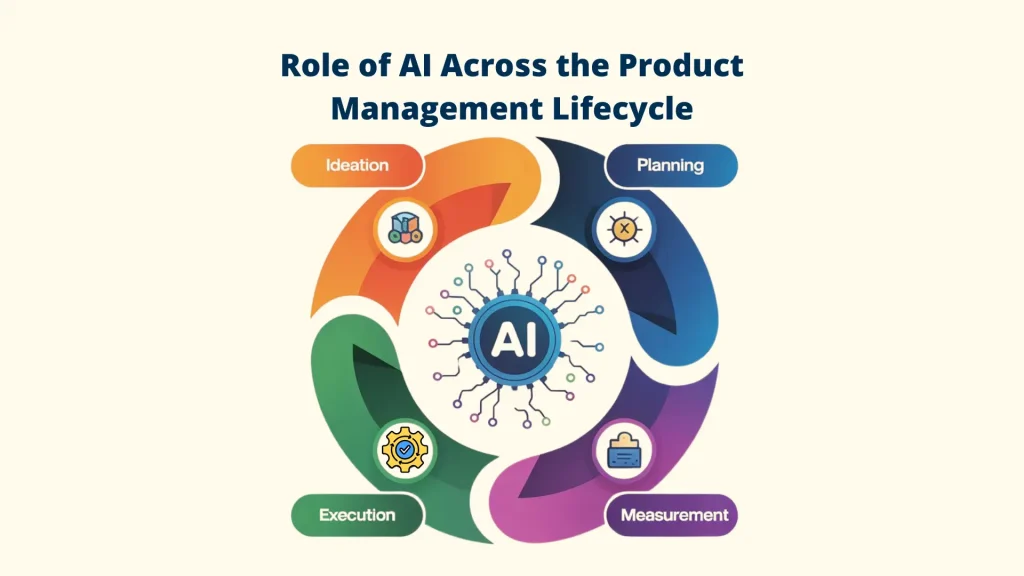
AI tools for product managers have become part of every step in product management. From the first idea to final performance tracking, AI tools now support the entire product lifecycle.
Here’s how AI helps at each stage:
💡 Ideation
Product managers can identify market gaps, test concepts more quickly, and come up with feature ideas with the aid of AI tools.
🗺️ Planning
Smart AI tools for product managers build roadmaps, rank features by impact, and flag possible risks early.
⚙️ Execution
AI automates routine tasks, schedules work, and keeps teams aligned.
📊 Measurement
AI reviews user behavior, customer feedback, and key metrics to show what’s working.
The biggest change?
Product managers are moving from manual work to AI-powered workflows. Meeting notes are written automatically. Data insights are explained in simple language. Backlogs are sorted using real data, not assumptions.
Another key shift is the rise of context-aware AI assistants. These tools understand your product, your users, and your goals. Instead of generic advice, they give suggestions that actually fit your product.
The Need for AI Tools for Product Managers
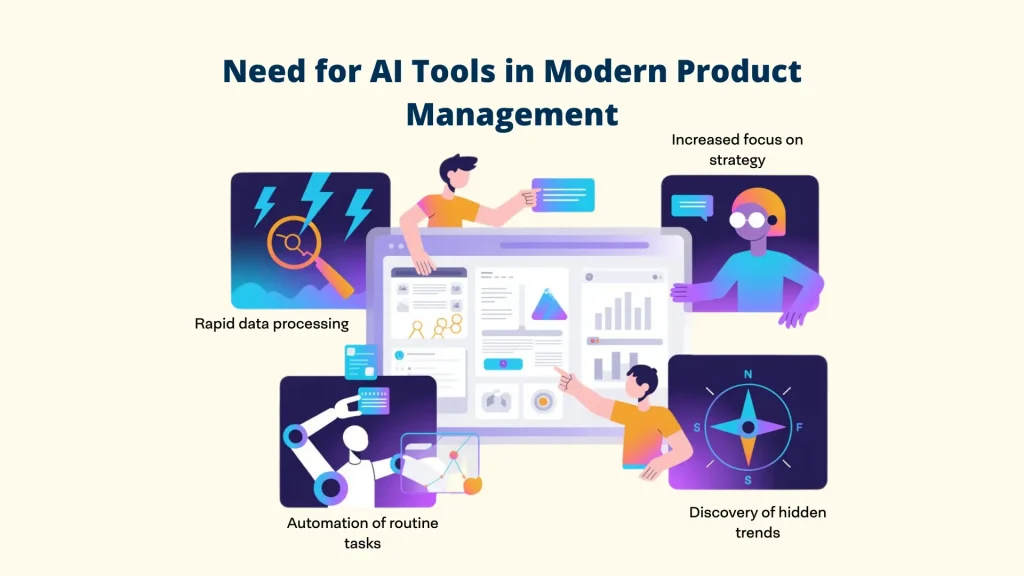
AI tools for product managers aid in the heavy lifting, making work faster and smarter. Here’s how AI improves product management in four ways:
A. Processing Massive Data Quickly
In just a few minutes, AI tools can examine thousands of customer reviews, survey answers, or support tickets to identify trends that would take days for humans to discover.
B. Uncovering Hidden Insights
AI finds connections and trends hidden in data. It can show how features affect retention, warn about early churn, or highlight usability problems before they grow.
C. Automating Routine Work
Routine work like reports, release notes, and meeting summaries can be automated. AI Tools for product managers, like Writix, a multi-AI platform with built-in workflows and language support, help PMs save hours each week.
D. Refocusing on Strategy
When AI handles execution tasks, product managers can focus on what matters most: understanding users, shaping product vision, and leading teams with clarity.
In short, AI doesn’t replace product managers; it helps them work at a higher level.
Why Are AI Tools Essential for Product Managers?
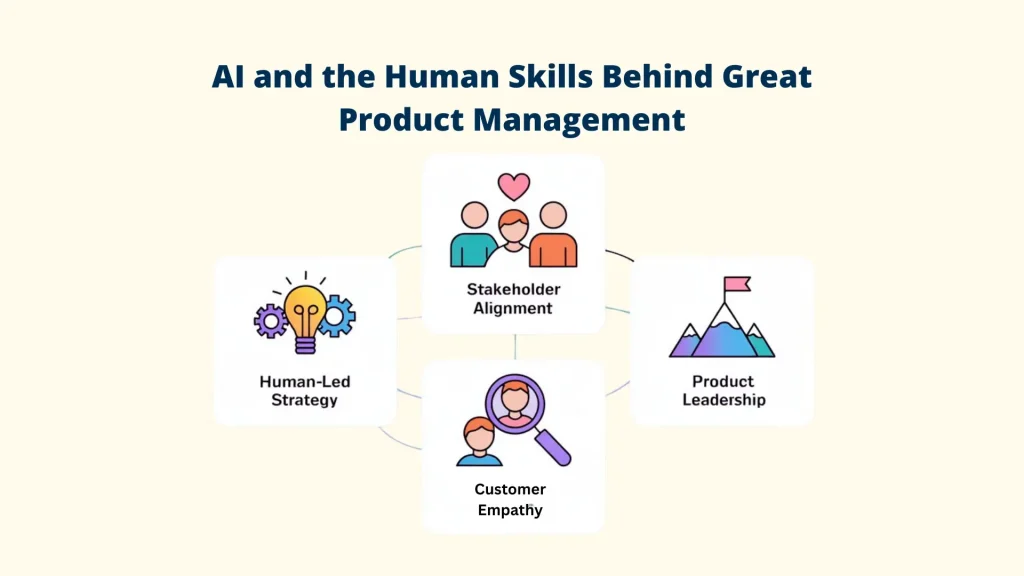
The human component of product management is complemented, not replaced, by AI tools for product managers.
A. Strategy and creativity – Setting a product’s direction takes vision and smart judgment. While AI tools for product managers can provide insights, people shape the future.
B. Stakeholder alignment — Building consensus and managing priorities need emotional intelligence.
C. Customer empathy — True understanding comes from real conversations, not just data.
D. Leadership and influence — Motivating teams and driving alignment remain uniquely human strengths.
In short, AI is a force multiplier, not a substitute. The most successful product managers will be those who use AI to amplify their human insight, not replace it.
The 8 Best AI Tools for Product Managers
1. Writix – Multi-AI Workflow Automation
Best for: Content creation, documentation, and multi-channel marketing with no prompt engineering required.
Overview
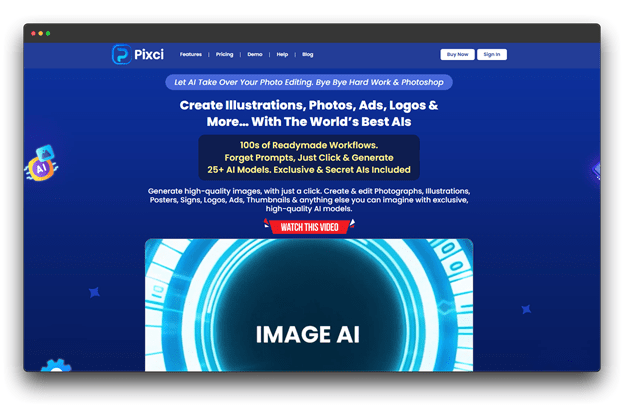
With pre-made templates for tasks such as PRDs, release notes, user manuals, HR policies, and marketing content, Writix is an AI tool for product managers that serves as a workflow platform that does not require prompts.
Users can choose a workflow, add inputs, and instantly produce high-quality content without having to switch between tools or create intricate prompts.
Pros
✅ No prompt engineering needed
✅ Saves hours on documentation and content creation
✅ Consistent, high-quality results across functions
✅ Easy to use for non-technical teams
Cons
❌ Premium access needed for advanced features
Pricing: $47 per month
2. ChatPRD – AI-Powered Product Requirements
Best for: Creating, enhancing, and critiquing Product Requirements Documents (PRDs).
Overview
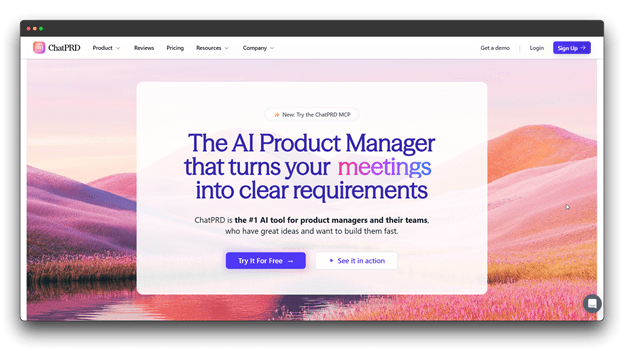
AI assistants designed specifically for product managers differ from general AI tools in that they understand product frameworks, user stories, and stakeholder expectations, allowing PMs to create polished, standards-compliant PRDs in minutes.
ChatPRD works directly with tools such as Lovable and Bolt, allowing PMs to convert PRDs into functional prototypes, bridging the gap between planning and execution.
Pros
✅ Tailored for product management workflows
✅ Speeds up PRD creation and review
✅ Improves quality with real-time critique
✅ Great learning tool for junior PMs
Cons
❌ Slight learning curve for advanced use
❌ May require edits for niche products
❌ Best results when guided by PM expertise.
Pricing: $39 per month.
3. Dovetail AI – Customer Intelligence Platform
Best for: Scalable customer research synthesis and feedback analysis.
Overview:
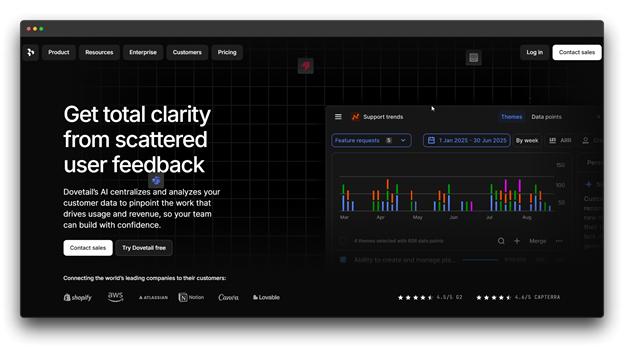
Once a simple research repository, Dovetail AI has evolved into a full-fledged customer intelligence platform that turns scattered customer feedback from calls, surveys, tickets, and interviews into structured, actionable insights.
For product managers, Dovetail eliminates the time sink of manually reviewing transcripts. It automatically tags feedback, identifies recurring themes, builds dashboards, and tracks sentiment shifts all within hours instead of weeks.
Pros
✅ Saves 10+ hours per week on analysis
✅ Integrates with Zoom, Intercom, Slack, and Zendesk
✅ Proven 236% ROI in independent studies
✅ Enterprise-grade security (SOC 2, GDPR compliant)
Cons
❌ Seat-based pricing can add up for large teams
❌ Human review needed for nuanced interpretation
❌ Learning curve for advanced tagging setup
Pricing: Custom Pricing
4. Motion – AI Task & Schedule Management
Best For: Intelligent task prioritization and automated scheduling.
Overview:
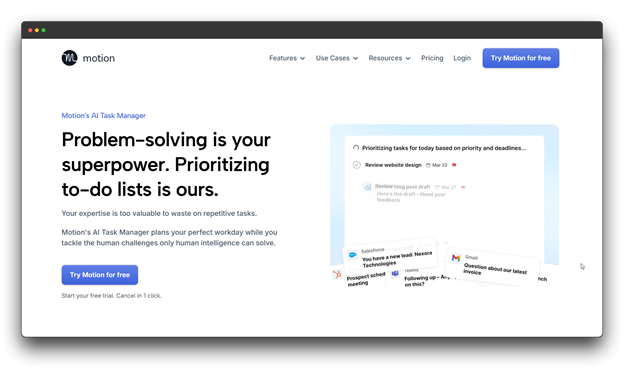
Unlike traditional project management apps, Motion dynamically schedules work based on deadlines, dependencies, and availability, with no manual organizing required.
For busy product managers balancing strategy, meetings, and execution, Motion acts as a personal chief of staff, ensuring nothing slips through while preserving deep focus time.
Pros
✅ Saves up to 30 days per year via automation
✅ Eliminates manual calendar management
✅ Reduces overload and meeting fatigue
✅ Combines tasks, projects, and scheduling in one tool
Cons
❌ Setup takes time to personalize
❌ Learning curve for workflow templates
❌ Higher cost than basic task apps
Pricing: $49 per month
5. Articalize – Content Repurposing Engine
Best for: Turning videos and social posts into SEO-optimized articles.
Overview:
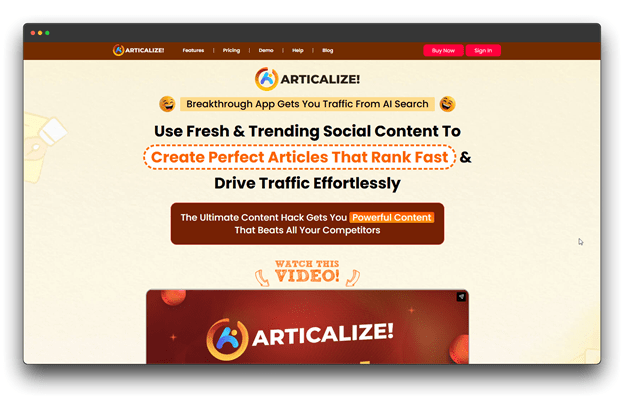
Product managers and marketing teams can use Articalize to create polished, search engine-friendly blog posts from pre-existing content, such as YouTube demos, Twitter threads, Reddit discussions, or Quora answers.
It’s ideal for PMs managing blogs, knowledge bases, or thought leadership content who want to scale content production without writing from scratch.
Pros
✅ Saves hours on content creation and repurposing
✅ Produces SEO-friendly articles that rank well
✅ One-time payment option available
✅ Passes most AI detection tools
Cons
❌ May require editing for tone and brand voice
❌ Output quality depends on source material
❌ Not ideal for deeply technical content
Pricing: $47 per month
6. Gamma – AI Presentation & Roadmap Builder
Best for: Creating strategic roadmaps and stakeholder presentations without design skills.
Overview:
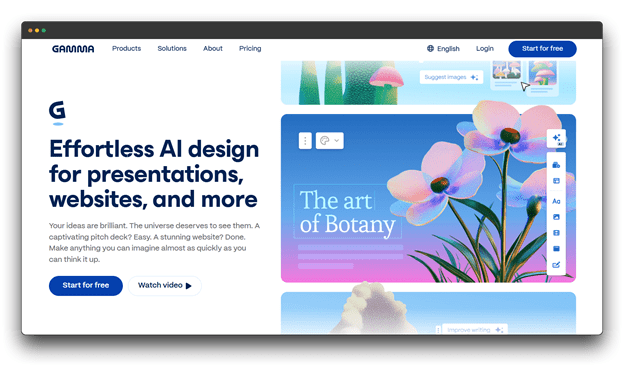
Gamma revolutionizes how product managers create presentations, transforming simple prompts into interactive, web-based decks.
Instead of manually building slides in PowerPoint, PMs can describe what they need a roadmap, a feature launch deck, or a strategy review, and Gamma generates a fully designed, professional presentation in minutes.
Pros
✅ Eliminates design work entirely
✅ Produces professional-quality decks in minutes
✅ Enhances engagement with interactive presentations
✅ Strong collaboration and analytics features
✅ Free plan with generous limits
Cons
❌ Scroll-based format less ideal for live presenting
❌ Limited design customization
❌ Brand consistency may need manual tweaking
Pricing: $38.28 per month
7. Pixci – Visual Communication for PMs
Best for: Creating product visuals, UI mockups, and visual updates without design expertise.
Overview
Pixci, an upcoming AI-powered visual collaboration platform, may assist as ai tool for product managers to convert wireframes, product concepts, and feature descriptions into polished mockups and visual briefs.
By combining AI-driven image generation with layout intelligence, Pixci enables product managers to prototype concepts, annotate visuals, and share feedback in a single workspace, with no design software required.
Pros
✅ Great for non-designers communicating visually
✅ Speeds up feedback loops with design and engineering
✅ Supports real-time collaboration and iteration
✅ Reduces dependency on design teams for early concepts
Cons
❌ Still emerging; limited public documentation
❌ Not as advanced as full design suites like Figma
❌ Quality varies with complex UI inputs
Pricing: $27 per month
8. Lovable – AI Prototyping Platform
Best for: Turning PRDs and designs into functional prototypes without coding.
Overview
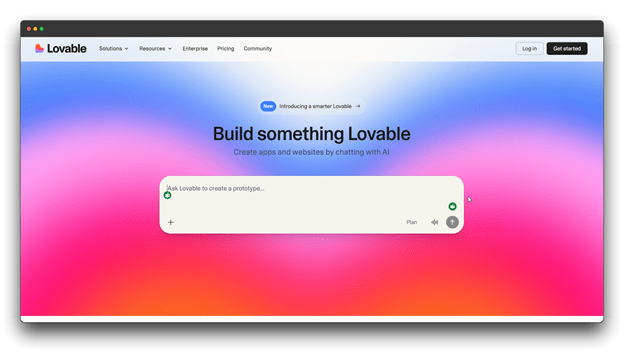
Without the need for engineering support, Lovable allows product managers to swiftly validate concepts by turning Figma designs, PRDs, or natural language descriptions into functional prototypes.
PMs can test features with real users, collect feedback, and iterate fast, all before involving developers.
Pros
✅ Validates product ideas without full dev resources
✅ Enables rapid user testing and iteration
✅ Generates high-quality, developer-ready code
✅ Integrates seamlessly with popular dev tools
Cons
❌ Lacks built-in debugging tools
❌ Learning curve for non-technical PMs
❌ Geared toward web apps (not mobile)
Pricing: $50 per month
How to Choose the Right AI Tools for Product Managers for Your Workflow
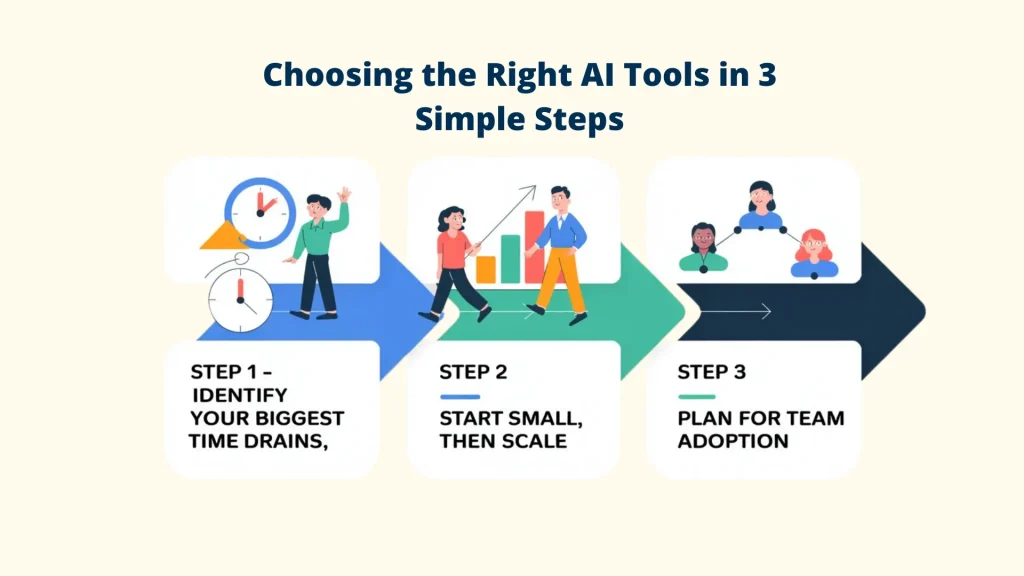
1. Identify Your Biggest Time Drains
Before adopting any AI tool, analyze where your time actually goes. Track a typical week and categorize tasks, meetings, documentation, feedback analysis, and strategic planning.
Your largest time sinks should guide your starting point:
- Struggling with meeting notes? → Try Motion or Writix.
- Spending hours on feedback synthesis? → Start with Dovetail AI.
2. Start Small, Then Scale
Avoid implementing too many AI tools for product managers at once. Instead, construct your AI stack gradually:
- Month 1: Adopt one tool for your biggest bottleneck.
- Month 2: Measure time saved and quality improvements.
- Month 3: Add a complementary tool if results are positive.
- Quarterly: Reassess ROI and adjust your toolset.
3. Plan for Team Adoption
A powerful tool is useless if your team doesn’t use it. Consider:
- Ease of onboarding (productive in under 30 minutes?)
- Availability of vendor training and support materials
- Collaboration features for shared access and editing
- Leadership buy-in to encourage adoption
Start with low-friction, intuitive tools, then expand to advanced platforms as your team’s AI fluency grows.
AI Tools for Product Managers: Workflow Examples
🔹Content Creation & Repurposing with Writix + Articalize
How it works:
1️⃣ Record a 30-minute product demo
2️⃣ Turn the transcript into a blog using Articalize.
3️⃣ Repurpose that content into social posts with Writix
4️⃣ Auto-create docs, FAQs, and user guides
5️⃣ Optimize for SEO (keywords, meta, headings)
6️⃣ Publish directly to WordPress and social channels
👉 This is a powerful way AI Tools for Product Managers reduce writing time and increase content reach.
🔹 Customer-Driven PRDs with Dovetail + ChatPRD
How it works
1️⃣ Collect user feedback from calls, interviews, and support tickets in Dovetail
2️⃣ Let AI spot patterns (for example: “Dark mode requested by 15 users this week”)
3️⃣ Ask Dovetail AI to list top pain points by user type
4️⃣ Send insights to ChatPRD with clear context
5️⃣ Generate and review PRDs with user stories, metrics, and notes
🔹 Automated Task Scheduling with Motion
How it works
1️⃣ Add projects with deadlines and priorities
2️⃣ Split work into tasks with time estimates
3️⃣ Set dependencies and working hours
4️⃣ Motion auto-plans your schedule for deep focus
6️⃣ Team visibility helps avoid overload
💡 Why this matters
AI tools for product managers not only save time but also provide clarity when implemented properly. Reduced workload with better choices. Put more effort into creating the ideal product.
Conclusion
In the coming years, the most effective product managers will work more intelligently rather than longer.
AI tools for product managers are already helping PMs save time, cut manual work, and gain clear insights.
You don’t need to change everything at once. Start small.
Choose one AI tool that fixes your biggest time problem, maybe for writing, planning, or user research. Use it consistently for 30 days, track the results, and then expand from there.
The future belongs to PMs who build with AI, not without it.
FAQs about AI Tools for Product Managers
Q. How do product managers use AI?
A: Product managers use AI to analyze user feedback, prioritize features, automate documentation, forecast demand, and make faster data-driven decisions.
Q. What are the best AI tools for product managers?
A: It should be noted that all of the major AI tools for product managers include Writix and Dovetail (user research), ChatPRD (PRDs), Motion (work scheduling), and Productboard (roadmapping).
Q. Do product managers need technical skills to use AI tools?
A: No. The majority of AI tools for product managers have natural language interfaces that let PMs ask questions without having to know SQL or code.
Q. Will AI replace Product Managers?
A: No. AI replaces tasks, not roles. AI cannot empathize with a frustrated user or navigate the office politics of a high-stakes stakeholder meeting.